Industry Background
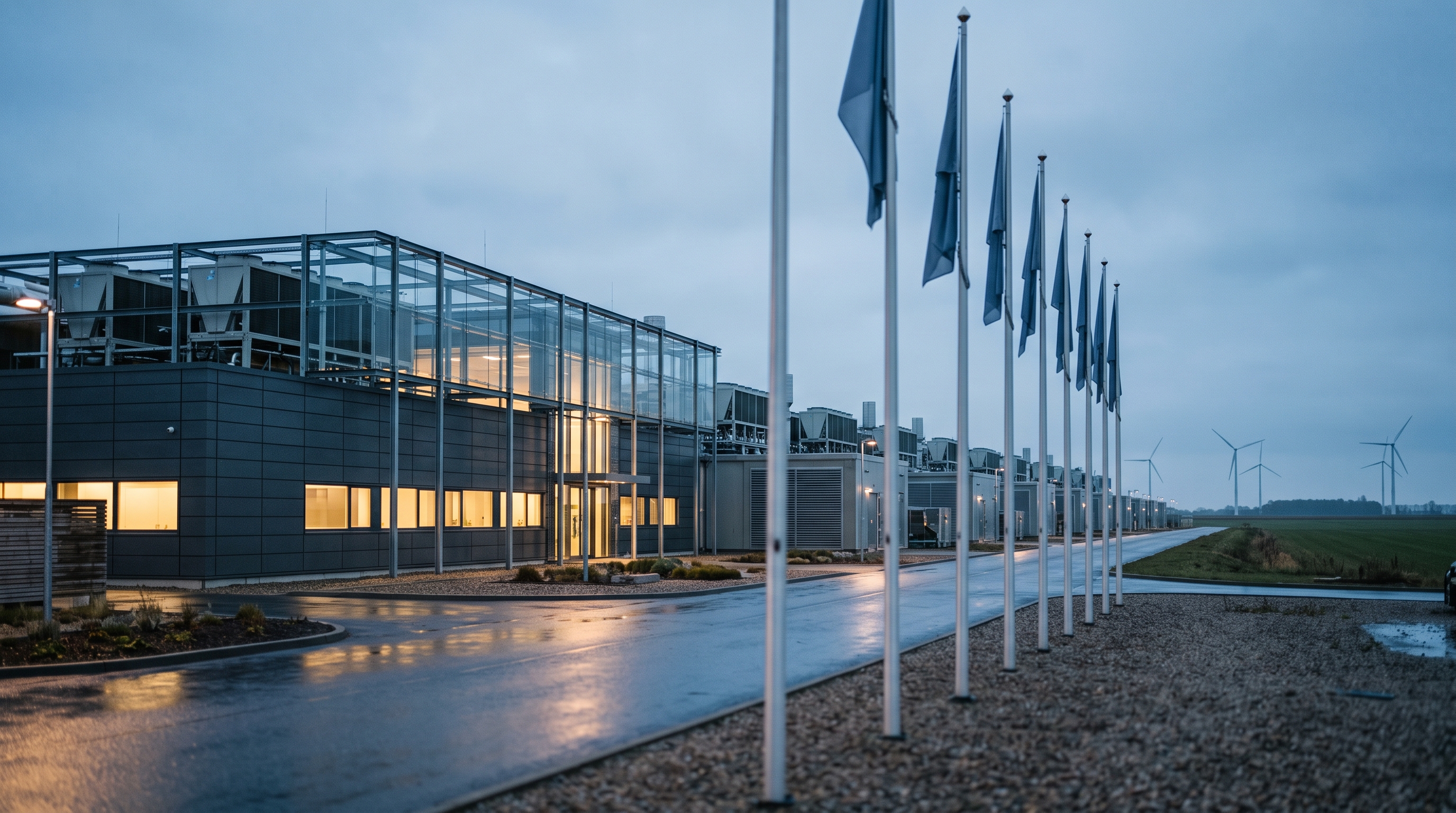
The UAE has spent the past three years converting hydrocarbon surpluses into positions across the artificial intelligence stack — compute, energy, and increasingly the industrial customers that consume both. Domestic projects such as the Stargate UAE programme and the country's expanding data centre estate established the UAE as a regional compute hub. The Germany package represents a different move: outbound deployment into an advanced economy's industrial base, at a moment when Germany faces well-documented pressure on energy costs, manufacturing competitiveness and digital infrastructure capacity.
The €40 billion builds on roughly €34 billion the UAE has already invested in Germany, making Berlin one of Abu Dhabi's largest single-country European exposures.
Why This Matters
Three shifts are visible in this transaction.
First, the UAE is no longer principally a destination for foreign capital and technology; it is an allocator of both. The investment profile — 1 GW of data centre capacity, energy assets, industrial participation — mirrors what the UAE has built domestically. The country is effectively exporting an infrastructure model it has already tested at home.
Second, the structure matters as much as the headline number. The Investment Council and 29 corporate MoUs create a standing channel for deal origination rather than a one-time announcement. For companies on either side, this is a durable access point, not a closed transaction.
Third, energy and compute are now being negotiated as a single asset class. A 1 GW data centre commitment is simultaneously a power commitment. Investors and operators evaluating AI infrastructure should expect power procurement, grid access and generation assets to sit inside the same deal structures going forward.
Implications for Businesses
UAE-based technology, engineering, construction and energy services firms gain a credible route into the German market on the back of state-level relationships. The near-term opportunities sit in the delivery layer: data centre construction and fit-out, cooling and power systems, grid interconnection, industrial automation and specialist staffing.
German mid-market industrial firms — the Mittelstand — should read this as an invitation to engage Gulf capital directly. Historically, these companies have looked to domestic banks and private equity. A sovereign-backed channel with a mandate for industrial and digital assets changes the financing landscape.
For all parties, due diligence expectations rise. Deals originating through an intergovernmental council will carry elevated scrutiny on governance, ESG and technology transfer conditions.
Implications for the UAE Market
Outbound investment of this scale strengthens the UAE's position as a two-way capital hub rather than a passive recipient. It reinforces Dubai and Abu Dhabi as headquarters locations for firms wanting simultaneous exposure to Gulf capital and European industrial markets.
There is a competitive consideration domestically. Capital and technical talent directed toward German data centre capacity is capital and talent not deployed in UAE facilities. The domestic data centre market remains strongly supported by regional demand, but operators should anticipate tighter competition for specialist engineering skills across both geographies.
Professional services demand — legal, tax structuring, cross-border transaction advisory, market intelligence — will rise in the UAE as the corridor activates.
Implications for International Companies
For US technology firms, the UAE's European deployment introduces a new counterparty in markets where they have historically negotiated directly with European operators. Partnership rather than competition is the likelier configuration, but positioning should be reviewed.
For companies from smaller economies, including Georgia, the relevant signal is directional: the UAE is actively building bilateral investment architecture with partner states. Governments and business associations able to present structured, investable pipelines have a demonstrated route to Gulf capital. The mechanism used in Berlin — joint declaration, investment council, bundled corporate MoUs — is replicable at smaller scale.
Suggested Actions for Executives
-
Map your company's capabilities against the announced investment categories: digital infrastructure, energy, advanced technology, industry. Identify where you are a supplier, a partner or a competitor.
-
If you operate in the UAE and serve infrastructure markets, engage UAE-German corridor intermediaries now, before the delivery pipeline is contracted.
-
Review power strategy alongside digital strategy. Compute commitments are energy commitments; treat them as one planning exercise.
-
For firms seeking Gulf capital: build the investable proposition before seeking the meeting. Sovereign-linked capital responds to structured pipelines, not to introductions.
-
Monitor the Investment Council's operating structure as it is published. Its terms of reference will indicate which sectors and deal sizes are genuinely in scope.